Clavicle Fracture
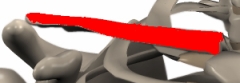
What causes a fractured clavicle, and what should you do about it when it happens? All good questions...and I am glad you asked.
How it Occurs
One of the most common ways it occurs is falling on an outstretched arm. As your body weight lands on your arm, it forces the humerus into the shoulder joint, and the forces transferred up the arm, if great enough, can cause the clavicle to fracture.Another mechanism that can cause a broken clavicle is to take a direct blow or hit to the collar bone. While football players wear pads, this is sometimes not enough to stop a fracture from happening. And rugby players don't wear any pads at all, so it is easy to see how this can happen with them. It takes quite a bit of force to fracture a bone, so not only will there be injury to the clavicle, but also to the surrounding soft tissue.
Symptoms
The most common symptom is pain. It is generally localized to the area of injury, right along the fracture site. There may also be some localized swelling over the gone, and it may be a little deformed, depending on the severity of the fracture. Looking at a clavicle fracture in the mirror, you may see a "step off deformity", where the bone seems to drop in the middle.Because the clavicle attaches to the shoulder blade
at the AC joint, shoulder range of motion will often be limited and
painful. As you lift your arm, the clavicle must rotate in order for
the shoulder to move. This rotation can cause pain.
You may also experience grinding or popping when
you move your arm, as the ends of the bone may be moving against each
other.
Treatment
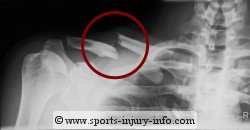
Depending on the severity of the fracture, and whether or not it is displaced, you will be placed in a sling for a few weeks as the bone heals.
If the fracture is severe, or the ends of the bones are not aligned, surgery may be required in order to get the bones to heal correctly. Your physician will be able to decide if surgery is needed.
Rehabilitation
Many clavicle fractures do not require surgery. They do however benefit from shoulder rehab. Exercises to restore range of motion, strength, and shoulder function are essential.After you are able to remove the sling and start using your arm again, talk to your physician about rehab for your shoulder. It will speed your recovery and help you get the best possible outcome.
Summary
Clavicle fractures are common sports injuries with sports like football and rugby. They can occur from falling on an outstretched arm, or from a direct blow. They usually require use of a sling for several weeks, and may require surgery depending on the severity. If you think you may have broken your clavicle, please see your physician as soon as possible.Didn't find what you were looking for? Search SII for more information...
Running Pain Solutions

Written for Runners by a runner, you'll learn a holistic approach to improving mobility, restoring normal movement and muscle activation patterns, and restoring the body and mind connection.
This Kindle Book contains a step by step program to keep you running pain free. Included are detailed instructions and illustrations for exercises to improve mobility, balance, neuromuscular control, strength and endurance. Only $7.49!
Get Your Copy Today!