ACL Knee Injury
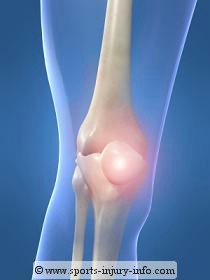
Could an ACL knee injury be the most dreaded
injury in sports?
More feared than a concussion, fractures, ankle
sprains, or hangnails?
I would have to
say it is.
If you talk with any
athlete, from high school to college, their biggest fear is the
possibility of a torn ACL. It generally means the end of the season,
surgery, and months of rehab.
If
you have had an acl knee injury, then you know
what I am talking about. All of the thoughts that went through your
mind when you felt your knee buckle, heard or felt the dreaded "pop",
and saw your sports career flash before your eyes.
It
is the first
thing that athletes think about when they injure their knee...
"Please
let the ACL be ok."
How Common is an ACL Knee Injury?
I could quote you statistics, with injury rates and ACL surgery rates
for the United States, but those numbers are boring, and don't really
give a good picture. In my opinion, ACL tears are, unfortunately, way
too common.
I work in a sports medicine clinic that sees between 30 and 50 patients
a day. At any given moment during the day, and especially in the busy
afternoons, you will find one, if not several ACL reconstruction
patients in the clinic.
I would estimate I treat
between 20-30
ACL reconstructions a year. And I am only one athletic trainer,
in one clinic in the country.
It is way too common.
Learn more about the Torn ACL
Why does it happen?
I am a true believer of treating the whole body, not just the injured
part. Every day I am amazed at how connected the body is, and how
important every part is. If you came into my clinic with knee pain, and
I evaluated you and said that the problem wasn't in your knee, but
rather in your hips, or ankle, or low back, you might think I was
crazy.
Since you are paying good money to get
better, hopefully
you would go along with me for a few treatment sessions. And after a
week or two, when your knee starts feeling better, you would begin to
understand that connection.
It took me a couple of years to start to realize how connected the body
is. In order to treat the knee, you have to look above and below
to make sure everything else is working. I think this is one of the big
problems with sports injury rehabilitation.
Whole Body Focus
Too many clinicians, physical therapists, and atheltic trainers who focus solely on the injured area and lose sight of the big picture. If you are going through rehab, ask your clinician about the joints above and below your injury and see what they say.
What does all of this have to do with an ACL knee
injury? Well, the most common problem that I see with patients who
suffer ACL tears is not at the knee. It is at the hip and the ankle.
They are weak, or tight, or both. And beleive it or not, it is this
weakness at the hips that eventually lead to the ACL tear.
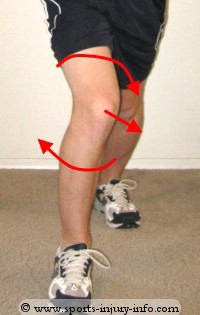
When you look at what the knee has to do during
sports, it is amazing how much stress it absorbs. Everytime you land,
your knee has to flex and absorb the stress of your body weight and
gravity. The muscles at the hip, especially the rotators and abductors,
are the muscles that control the position the knee ends up in.
When
these are weak, the knee ends up in positions that it shouldn't be
in...which results in injury.
Preventing ACL Knee Injury
If you want to give your ACL a fighting chance, you need to think about
prevention. Go find a mirror, one that allows you to see your whole
body. Face the mirror, and then jump up in the air and land. Watch what
your knees do. Go ahead, try it...I will wait right here.
Back already? Great!
What did you see? I bet you saw your knees come
together, towards each other, as you landed. Maybe a little, maybe a
lot. Now, go back to the mirror and try to jump and land without
letting your knees come closer together.
A little harder than it sounds, eh? Strengthening your hips is the key
to fixing this problem. And it can go a long way in preserving your
ACL,
and your sports season.
Chances are, you could benefit from a conditioning program to help
strengthen your core and your hips. Just 2-3 exercises, 2-3 times a
week could make a huge difference. What do you have to lose, really?
And what would you stand to gain?
Summary
A Complete Prevention Program
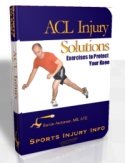
ACL Injury Solutions is a comprehensive 8 week program designed to help protect your ACL.
It includes all of the best exercises for improving muscle control, balance, strength, and mobility.
If you are recovering from an
ACL tear, or want to prevent ACL knee injury, ACL
Injury Solutions is for you. Give your knee a fighting chance, and keep yourself off the sidelines!
Running Pain Solutions
Written for Runners by a runner, you'll learn a holistic approach to improving mobility, restoring normal movement and muscle activation patterns, and restoring the body and mind connection.
This Kindle Book contains a step by step program to keep you running pain free. Included are detailed instructions and illustrations for exercises to improve mobility, balance, neuromuscular control, strength and endurance. Only $7.49!
Get Your Copy Today!