Knee Rehab Basics
Knee rehab after an injury can be an intimidating process. This is especially true after knee surgery. Knowing what to expect from your rehab, and what kind of things you should be doing can help set your mind at ease. It will also help you make sure that you are covering all of your bases, and that your athletic trainer or physical therapist is not overlooking any component of the rehab process.
Below are the major areas that should be evaluated and addressed with any type of knee rehabilitation. If you are missing one or more of these areas in your current knee rehab program, talk with your AT, PT, or physician to find out why, and to make sure you are doing everything possible for your injury.
Improving Range of Motion
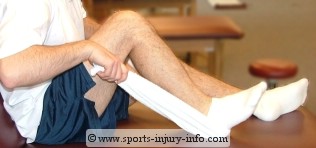
Improving range of motion is
essential during the rehabilitation process. After a knee
injury, depending on the severity of the injury and
what structures are injured, you may have a little or a lot of range of
motion loss. Knee surgeries and injuries to the
knee ligaments often cause significant range of motion loss. Overuse
injuries like patellar tendonitis and patella femoral syndrome don't
usually involve loss of motion, although some motions may be painful.
You should be doing some type of exercises to work on improving your knee motion. Towel pulls, heel slides on the floor or the wall, and passive stretching are good exercises to improve flexion. Passive stretching, joint mobilizations, and quadriceps sets can all be done to improve knee extension.
Mobility and Flexibility
Flexibility improvement is a key ingredient
for any rehab program. For the knee, good flexibility in the hamstrings, calf, hips, and lower back are essential
for normal function.
Your rehabilitation should include some
type of exercise that helps to improve your flexibility and mobility.
Make sure that hip and lower back mobility, as well as ankle mobility
is not overlooked. Restrictions in these areas can directly affect knee
function.
Mobility and flexibility go hand in hand with range of motion. Depending on the nature of your injury, you may need to be doing both range of motion exercises and stretching and flexibility work. You may also need manual therapy joint mobilizations to help restore normal function of the knee joint.
Strength and Stability
Strengthening of the knee muscles is important during rehab. Restoring normal quadriceps and hamstring strength is a primary focus. After injury, the inflammatory process often causes inhibition of the quadriceps muscles. Initially in the rehab process, the goal is restore normal activation and contraction of these muscles, and then to build up their strength. This can be accomplished with a lot of different exercises. Some of my favorites are lunges, step ups, squats, standing knee extensions with theraband, and quadraped extensions.
The quadriceps and hamstrings work together to stabilize the knee during activities. This means that you should be doing exercises that involve weight bearing positions, and require the muscles to co-contract to stabilize the knee. I prefer more functional exercises like lunges and squats to machine exercises like leg extensions or hamstring curls.
Don't forget strengthening
of the hips and core. The muscles on the outside of the hip, as well as
the lower abdominal muscles must be
strong in order to have good knee
stability and to prevent injuries like PFS and patellar tendonitis. Remember, all of the muscles of the trunk and lower extremity work together to produce normal function - so don't neglect the hip and core muscles in your knee rehab program.
Balance and Proprioception and Gait
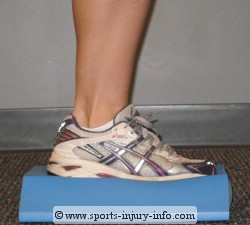
Your knee rehab program should include a variety of balancing activities to help improve your proprioception. Balance exercises help to improve the communication between the joints and muscles, and improve your overall stability. These exercises may be simple like a single leg balance, or more advanced like balancing and playing catch. Improving your balance helps the muscles and joints to work together more efficiently, and cannot be overlooked.
In the early stages of rehabilitation, some focus should be placed on improving your gait, or the way you walk. After a knee surgery, you body has to relearn proper walking, and this is sped up by gait training. Heel to toe walking, high knees, retro walking, and fast walking are all gait training exercises that can help eliminate your limp. Once you have been cleared to jog or run, gait exercises can be used to gradually get you back into running, and improve your overall form.
More Information
- Knee Rehab: Range of Motion Exercises
Simple exercises to work on improving flexion and extension.
- Knee Strengthening Exercises
Exercises for strengthening of the quadriceps and hamstrings.
- Hamstring Stretches
A variety of hamstring stretches from traditional to functional.
- Hip Stretches
Includes stretches for the hip flexors and illiotibial band - Knee Rehab: Lunges
- A new twist on traditional lunges. Includes multi-directional lunges and additional challenges.
- Lower Abdominal Exercises
Exercises to improve core muscle activation and core stability - Balance
Exercises
Exercises for improving balance. Includes variations and progressions of the simple single leg balance
SII › Knee Rehab/Treatment
Recent Articles


-
Common sports injuries - Straight forward information from Sports Injury Info
Nov 25, 15 05:44 PM
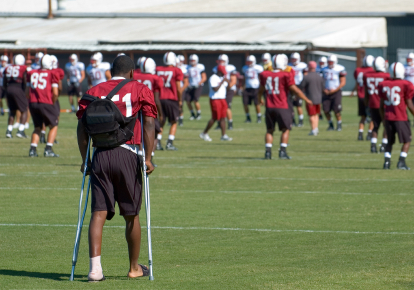 Learn more about common sports injuries. From ACL tears to ankle sprains, we include the information you need to identify your injury and determine the best course of action.
 -
Stories of Multiple ACL Tears
Sep 25, 13 05:03 PM
 Read stories about visitors who suffered multiple ACL tears, how they recovered, and tips for prevention.
 -
Australia - Christian's soccer acl recovery age 13
Apr 24, 12 12:47 AM
Hi guys, I'm now nearly 6 months into my recovery. I had a FFA soccer scholarship and things were looking good until I injured myself on the 2nd day of
Subscribe to
"The Athletic Trainer's Corner"