What is a Salter Harris Fracture?
A Salter Harris Fracture is a fracture of the growth plate of the bone. This type of fracture is usually seen in younger people who are still growing.A growth plate fracture can be a serious injury if not treated correctly.
Below you will find more information about the different types of Salter Harris fractures, as well as appropriate treatment options.
The Growth Plate
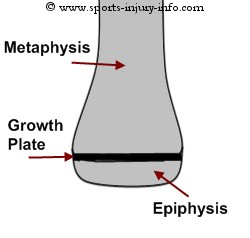
The metaphysis, the physis, and the epiphysis. The growth plate is the area of bone between the metaphysis and the epiphysis, and this is where the bone is actively growing, making it longer.
When I explain bone structure to my patients, I tell them to think of the bone like an Oreo cookie.
You have the top cookie (metaphysis), the bottom cookie (epiphysis), and the creamy middle (growth plate). Salter Harris fractures can occur to either the top or bottom part of the bones, or both.
Let me explain...
Salter Harris Type I Fractures
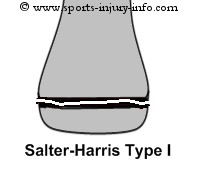
Treatment usually consists of immobilization for a period of time, 4-6 weeks.
Type II Fractures
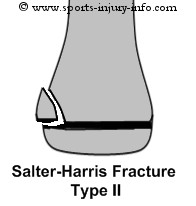
So, in the Oreo example, imagine breaking off part of the top cookie.
Type II fractures usually do not cause growth problems, and are treated with immobilization. It is important that the fracture be aligned correctly in order to heal properly.
Type III Fractures
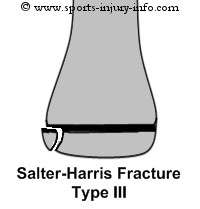
They may also require surgical intervention in order to re-align the bones for optimal recovery.
Type IV Fractures
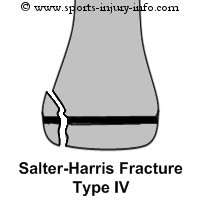
Imagine breking your Oreo cookie in two.
Long term disability and growth problems are common with this type of fracture because of the disurption of both the metaphysis and epiphysis.
Surgical intervention is common in order to re-align the bones correctly.
Type V Fractures
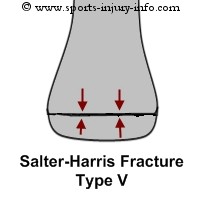
Imagine smashing your Oreo cookie.
There is significant disruption of the epiphyseal plate and growth problems can be severe with this type of injury.
Summary
Growth plate fractures can be a serious injury depending on the type of fracture. Types I and II are the least likely to have long term growth problems or require surgical intervention. Types III, IV, and V are more likely to cause growth related issues, or require surgery. With any type of fracture, it is important to follow your physician's instructions and make sure that your injury is treated correctly.Didn't find what you were looking for? Search SII for more information...
Running Pain Solutions
Written for Runners by a runner, you'll learn a holistic approach to improving mobility, restoring normal movement and muscle activation patterns, and restoring the body and mind connection.
This Kindle Book contains a step by step program to keep you running pain free. Included are detailed instructions and illustrations for exercises to improve mobility, balance, neuromuscular control, strength and endurance. Only $7.49!
Get Your Copy Today!