ACL Reconstruction
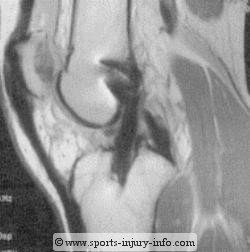
ACLreconstruction is a common knee surgery among athletes and active people. It is estimated that several hundred thousand are performed each year in the United States.
With
increased sports participation,
especially at the high school and collegiate levels, ACL knee injury
has become commonplace among athletes.
While
many knee injuries can be treated conservatively, ACL tears often must
be treated surgically. The ACL is a complicated and extremely important
structure in the knee. Its absence causes great loss of function. It is
widely accepted that it is necessary to reconstruct the ACL in younger,
atcive people, to help preserve the long term health of the knee.
Lets
look closer at this knee surgery, the ACL reconstruction.
Reconstruction vs. Repair
Simply
put, an ACL reconstruction seeks
to replace your damaged ACL with another similiar type of tissue.
Reconstructing it means that it must be placed in the same position as
your original ACL, and that the tissue used must have similiar
properties to the ligament that was torn.
It is
important to realize that a reconstruction, when talking in surgical
terms, is different from a repair. A repair means that the original
tissue is somewhat still intact, and that it is mended in some way to
return it to a working order. While many ligaments in the body can be
repaired (such as in the shoulder), the ACL cannot. Primary repair of
the ACL has long been abandoned as a failing procedure.
Choosing the Graft Tissue
The construction of the new ACL must be as
close to the original as possible. There are many different types of
tissues in the body that can be used for an ACL graft. The two most
common are the patellar tendon
and the hamstring tendon.
ACL surgery has been performed with other grafts as well, but
by far, the majority of surgeries performed use one of these two
tendons. The graft tissue can come from your own body, or may come from
a cadaver. Cadaver grafts are called allografts, while your own tissue
is called an autograft.
Each has its own unique
strengths and
weaknesses. Most physicians will specialize in one type of graft use or
the other. It comes down to their own philosophies, success, and
training on which graft choice they prefer.
I would
encourage you to discuss with your physician the graft that will be
used for your ACL reconstruction, and make sure that you are aware of
the strengths and weaknesses of each tissue type.
The Procedure
ACL reconstruction usually begins with a knee
arthroscopy. You are placed under general anesthesia, and the physician
places the arthroscope into your knee. They will use two portals, one
on each side of the knee. One portal contains a camera, the other the
tools to work with.
The arthroscopy gives the
physician the ability to look inside of your knee, and to see exactly
what is going on, and what is damaged. They will explore your knee, and
will look for the following:
- Damage to the ACL and PCL
- Damage to the meniscus
- Damage to the bone or articular surfaces
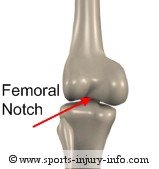
Once the "clean up" is finished, they will create a notchplasty in the femur to increase the size of your femoral notch. This is necessary to provide space for the new ACL graft.
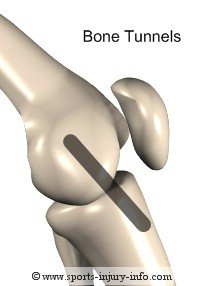
The graft is harvested, and then tunnels are drilled in both the tibia and the femur, over the "footprint" of your old ACL. After the tunnels are drilled, the new ACL graft is placed in the tunnels, tightened, and then secured using small screws.
The incisions are closed, dressings applied, and you are sent to recovery.
Other Things to Consider
I treat ACL surgery patients daily. They all have lots of questions. I
have provided information based on all of their different
questions below.
Choosing
a Physician For Your ACL Surgery
Not all
orthopedists are created equal. Do you know what to look for in a good
surgeon for your ACL surgery?
ACLR:
Questions
for Your Physician
Your
orthopedic surgeion is the best person to answer your questions about
ACL surgery. Here is a list of questions to get you started...
Graft
Choices:
Patellar Tendon
Learn about the benefits and
drawbacks of this graft type, and how it plays into the reconstruction
and rehab.
Graft
Choices:
Hamstring Tendon
Is
the hamstring tendon graft a good choice for you? Read more about this
tissue type, why it is used, and how it affects your rehab.
ACLR:
Pre Surgical Exercises
A good start to pre-surgical
ACL exercises to help you prepare for surgery.
ACLR:
What to Expect
How
much does it hurt? What will my knee feel like? What on earth is all of
this yellow stuff? These questions and more are answered here.
ACLR:
The First Week
The
first week after surgery is important to get yourself started out on
the right foot. Learn about what you can do to maximize your recovery.
ACLR
Rehab:
Regaining
Range of Motion
Regaining motion after surgery is
very important. Here are a few ways you can work to improve your motion.
ACLR
Rehab:
Regaining
Strength (Coming Soon)
ACLR Rehab:
Restoring Normal
Gait (Coming Soon)
ACL
Recovery
Timeline
How
long will you be on crutches? How long do you have to wear a brace?
When can you run again? Read through my ACL timeline and learn more
about what lies ahead.
ACL Surgery Stories
If
you have had an ACL reconstruction, or are getting ready for this
surgery, I want to hear your story. Whether you have questions you want
answered, or just want to share your experience, this is the place for
you.
Running Pain Solutions

Written for Runners by a runner, you'll learn a holistic approach to improving mobility, restoring normal movement and muscle activation patterns, and restoring the body and mind connection.
This Kindle Book contains a step by step program to keep you running pain free. Included are detailed instructions and illustrations for exercises to improve mobility, balance, neuromuscular control, strength and endurance. Only $7.49!
Get Your Copy Today!