Patella Femoral Syndrome Rehab: Are you on the right track?
Patella femoral syndrome rehab is extremely common in sports medicine and physical therapy clinics. I always have at least one patient that I am treating for patella femoral problems. One of the reasons for this is because there are so many different causes of PFS.
Many times one or more areas can be overlooked. As clinicians, we sometimes focus in on one specific joint, or one specific deficit, and fail to see the entire picture. This can mean neglecting the hips, or overlooked biomechanical issues at the feet.
To help you make sure that your rehab is on the right track, I have included specific areas that your rehab should be addressing. This will help guide you in your rehab, as well as make sure that your athletic trainer or physical therapist is not overlooking a key component.
Biomechanics
One of the easiest things to fix with patella femoral syndrome is faulty foot mechanics. A thorough evaluation of your gait cycle and foot structure should be completed. This will give your ATC or PT a good idea of how your feet may be affecting your knee.Treating foot mechanic problems is usually done with some type of orthotic, or shoe insert. Overpronation is the most common thing that I see with my patients, and orthotics make a huge difference in their knee pain. Ask about your foot mechanics if they have not been evaluated.
Strength
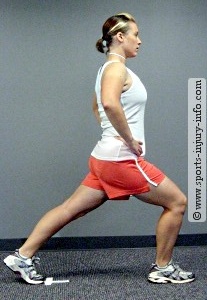
These muscles are in a much better position to control knee motion and prevent knee pain. Make sure that your rehab involves some type of exercises to improve hip and core strengthening.
Mobility
Good mobility in the lower extremity is essential for normal function. Mobility and range of motion at the knee is always assessed. However, mobility restrictions at the foot and ankle, as well as at the hips and lower back can contribute to PFS. Make sure that your low back, hip, ankle and foot mobility are evaluated. Very small deficits can have a huge impact on your knee pain. Improving mobility is a major focus of patella femoral rehab.Lateral trunk flexion, hip rotation and extension, and ankle plantarflexion, dorsiflexion, and calcaneal eversion are the most commonly overlooked areas.
Balance
Balance is key to lower extremity function. As a part of proprioception, it helps improve the communciation between the muscles and the joints, allowing the body to be more efficient. Poor balance and proprioception will often contribute to patella femoral syndrome. Make sure that your rehab program is addressing balance deficits, and challenging your balance in multiple planes.A Complete Program for PFS
The key is finding the BEST exercises to strengthen the hips and the core, improve mobility, and balance and muscle control in the areas that need it the most. I have been very successful treating patients with PFS, and I have found the most effective exercises for eliminating knee pain over the last 10 years.
For a complete program to treat patella femoral syndrome, you need a mobility, strengthening and balance exercises to address all of the different problems. I offer all of these in a comprehensive patella femoral rehabilitation program called Patella Femoral Solutions.
If you are suffering from knee pain, this is the answer you are looking for. It will walk you step by step through the BEST exercises to treat your knee pain. Imagine a life without pain when you play sports, walk up the stairs, or stand for too long. It is possible.
Summary
A complete and comprehensive patella femoral syndrome rehab program should incorporate all of the above areas. If just one area is overlooked, it can mean the difference between a successful recovery versus a possibly unnecessary surgical procedure. Take the time to talk with your ATC or PT and discuss every possible contributing factor in your knee pain. It will help get you off the sidelines faster.Didn't find what you were looking for? Search SII for more information...
Running Pain Solutions
Written for Runners by a runner, you'll learn a holistic approach to improving mobility, restoring normal movement and muscle activation patterns, and restoring the body and mind connection.
This Kindle Book contains a step by step program to keep you running pain free. Included are detailed instructions and illustrations for exercises to improve mobility, balance, neuromuscular control, strength and endurance. Only $7.49!
Get Your Copy Today!