Achilles Tendonitis
Achilles tendonitis is an annoying, and often very debilitating sports injury. It starts out as pain in or around the heel, but can quickly turn into a nightmare, as it can affect your everyday life.
If you have heel pain, you may be suffering from achilles tendonitis. Read on to find out more about this sports injury, and what you can do to keep off the sidelines.
The Achilles Tendon
Made famous by Greek
Mythology (or was it Roman?), the achilles tendon gets its name from the
great warrior Achilles. His only weakness on the battlefield...that
tiny tendon at the back of the heel.
I don't really know the story
exactly, but I know that heel pain can curb your athletic activities.
The
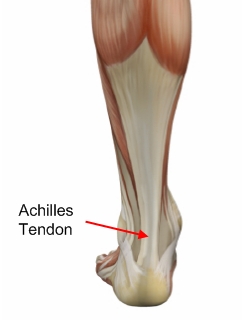
achilles tendon is soft connective tissue that connects the Gastroc
and Soleus muscles into the calcaneus. It is a rather large tendon, and
is easily felt along the back of the heel. Sometimes referred to as the
heel cord, it serves its purpose to provide an attachment of the calf
muscles. A working achilles tendon allows you to point your toes, and
to walk, run, jump, and do the Macarena.
What is Achilles Tendonitis?
Tendonitis is simply an inflammation of a tendon, in this case, the
achilles tendon. Inflammation can come in the form of swelling, pain,
and possibly redness. Think of inflammation as a fire in the tissues.
Some kind of stress is irritating the soft tissue, and thus causing
pain, and a break down of the tissue fibers.
Learn more about tendonitis
What causes Achilles Tendonitis?
There are many different things that can cause this injury. Some of the most common include:- -Poor Calf Flexibility
- -Poor Footwear
- -Weak or imbalanced muscles
- -Excessive pronation at the foot
- -Other biomechanical factors
Every time you raise up on your toes, or land from a jump, the tight muscles are stressed. When this occurs over and over, the tendon is overloaded, and it often becomes inflammed.
Footwear can play a role in achilles
injury. Athletic shoes with poor
arch support, a flexible or unstable heel box, and less than optimal
upper support can allow excessive movement of the rearfoot during
activities.
Learn more about athletic shoes
Weak or imbalanced muscles, especially the calf
muscles can lead to injury. If the muscles are not conditioned to
withstand the stresses you are placing on them during activities, then
these excessive stresses are transferred to the tendon, again leading
to inflammation.
Biomechanical issues, such as restricted motion at
the foot, knee, hips, or low back, as well as excessive pronation at
the foot can also cause this injury.
Treating Achilles Tendonitis
Treatment for tendonitis should focus on finding the
underlying problem and addressing it. Treating the symptoms with the
R.I.C.E. Principles
will be effective in reducing pain and the inflammation, however,
without addressing the underlying cause, your pain will most likely
return.
Calf stretching
to improve flexibility, strengthening of the lower
extremity muscles, choosing proper footwear, and addressing
biomechanical problems is the key to treating this injury.
If you are currently suffering from achilles tendonitis, plantar faciitis, ankle, or foot pain, you could benefit from a comprehensive foot and ankle strengthening program. Foot Pain Solutions is exactly what you need to help eliminate your foot, ankle, and low leg pain. Great for prevention too, Foot Pain Solutions can guide you to finally getting rid of your chronic foot and ankle pain.
Read more about Foot Pain Solutions
Preventing Achilles Tendonitis
Much like treatment, addressing the underlying causes can help to keep you off the sidelines. I can't say enough about having good flexibility. A routine of stretching, including your calf muscles, it important to keep your body working correctly. While many people out there say that stretching won't prevent injury, I know first hand poor flexibility and restricted motion will cause injury. So stretch - it won't hurt, and will help.
Make sure you have good shoes. Take the time to talk with your certified athletic trainer or family physician to determine your foot type, and spend the money for good athletic shoes.
When you start to have pain or discomfort in your achilles, seek treatment early. There is nothing worse than letting it go, thinking it will get better on its own, and then realizing, 3 months later, that it is effecting the way you walk and live life. Or worse, you suffer an achilles tendon rupture
A Word of Warning
Achilles tendonitis left untreated, especially in older athletes, can eventually lead to an achilles tendon rupture. This is a serious injury, and generally requires surgery and major rehabilitation to recover from. As the tendonitis gets worse, the tendon becomes weaker and weaker, until finally rupturing. So, don't wait...take care of it early and prevent an unwanted surgery and lengthy rehab.
Summary
Achilles tendonitis can be a very annoying sports injury. With proper stretching, footwear, and good biomechanics of the lower extremity, it can be prevented. If you are already suffering from heel pain, follow the R.I.C.E. Principles to treat the symptoms, and then see your certified athletic trainer or physician for treatment options to address the underlying causes.Didn't find what you were looking for? Search SII for more information...
Running Pain Solutions
Written for Runners by a runner, you'll learn a holistic approach to improving mobility, restoring normal movement and muscle activation patterns, and restoring the body and mind connection.
This Kindle Book contains a step by step program to keep you running pain free. Included are detailed instructions and illustrations for exercises to improve mobility, balance, neuromuscular control, strength and endurance. Only $7.49!
Get Your Copy Today!